

Discovering St Ninian.
The Whithorn Way takes you through a historical journey from Glasgow to Whithorn, where you will explore the stunning scenery of woodlands, beaches, hills and an amazing array of flora and fauna.

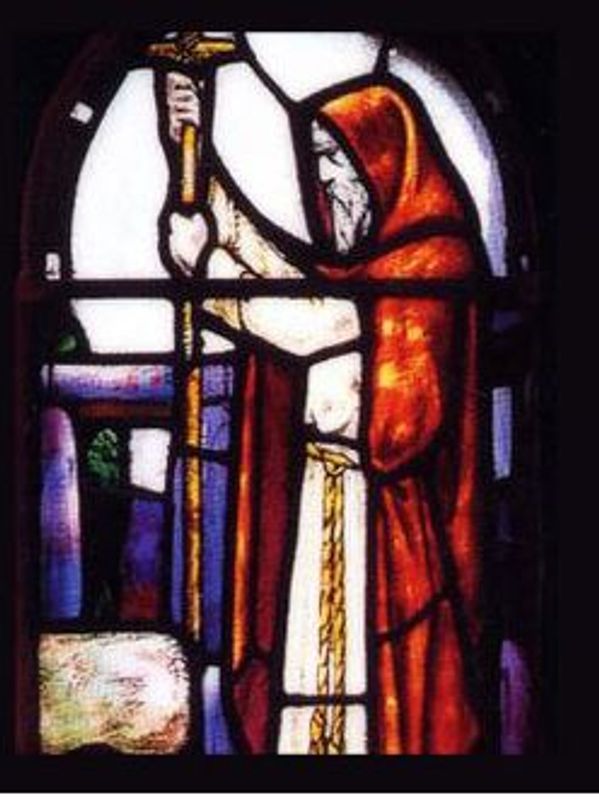
Around 1600 years ago, while Britain was still under the latter stages of the Roman Empire, a man named St Ninian arrived in Southern Scotland around 397AD. Though little is known about the life of Ninian, it is recognized that he was a Briton who studied in Rome and played a pivotal role in converting the Celts and Picts to Christianity. Ninian became the first Bishop of Galloway and erected a small stone church known as the "Candida Casa," or White House, which holds the distinction of being Scotland's first Christian building. Throughout his life and beyond, many miracles were attributed to St Ninian, and he was ultimately buried in a stone coffin near the altar of his church in Whithorn. Today, the historical journey to his shrine is a popular walking pilgrimage, particularly along THEWHITHORNWAY, attracting numerous pilgrims, including the notable King James IV, who honored him with a sculpture of the Royal Coat of Arms of Scotland over the Pend in Whithorn.

The Protestant Reformation of 1560 led to the gradual decline of Whithorn. Even so, walking pilgrimages continued sometime after the Reformation. However, an act of parliament, passed in 1581, rendered these pilgrimages illegal.
Pilgrims from the Dioceses of the Roman Catholic Church still visit Whithorn to celebrate the Feast of St Ninian on the 16th of September. Mass is held on the beach at St Ninian’s Cave on the last Sunday in August by the Diocese of Galloway, and everyone is welcome to join this historical journey. For more information, visit www.gallowaydiocese.org.uk.
In 2012, Paisley Abbey, which can be found at www.paisleyabbey.org.uk, marked their 850th Anniversary by organizing an Ecumenical Pilgrimage from the Barochan Cross at Paisley Abbey to St Ninian’s Priory in Whithorn. This event proved to be such a success that it inspired the formation of THEWHITHORNWAY by like-minded individuals in August 2014 during a meeting in Whithorn.
This 146-mile pilgrimage route takes you from the vibrant and historical City of Glasgow to the Royal Burgh town of Whithorn, offering stunning views, amazing scenery, beautiful sandy beaches, and a plethora of history with magnificent buildings.
Why walk on a pilgrimage? Some say it’s to walk to a holy place or shrine, while others see it as a chance to cross the fields, touch the sacred, and learn the mystery.
The Whithorn Way is a journey for people of faith or none. Enjoy the rich history, the picturesque countryside, meet the community, have a wonderful journey, and create your very own long-lasting memories.

Your first steps on your journey from Glasgow Cathedral.
The Whithorn Way offers an incredible historical journey as you embark on a walking pilgrimage from Glasgow to Whithorn. Along this scenic route, you'll experience breathtaking views of woodlands, beaches, and hills, showcasing an amazing array of flora and fauna.
This walking pilgrimage, known as the Whithorn Way, is divided into 13 sections:
1. Glasgow to Paisley
2. Paisley to Lochwinnoch
3. Lochwinnoch to Kilwinning
4. Kilwinning to Troon
5. Troon to Ayr
6. Ayr to Maybole
7. Maybole to Girvan
8. Girvan to Colmonell
9. Colmonell to Barrhill
10. Barrhill to New Luce
11. New Luce to Mochrum
12. Mochrum to Whithorn
13. Whithorn to the Isle of Whithorn.